Travel Guide Egypt · Preparation
What to pack for Egypt's climate
Lightweight fabrics that cover the shoulders and knees, sturdy walking shoes, and reliable sun protection form the backbone of any Egypt travelling guide aimed at actual travel conditions. The daytime heat, strong sun, and cool desert nights ask for practical choices — not a wardrobe built for resort photographs.
Chapter 01
Clothing for heat and modesty
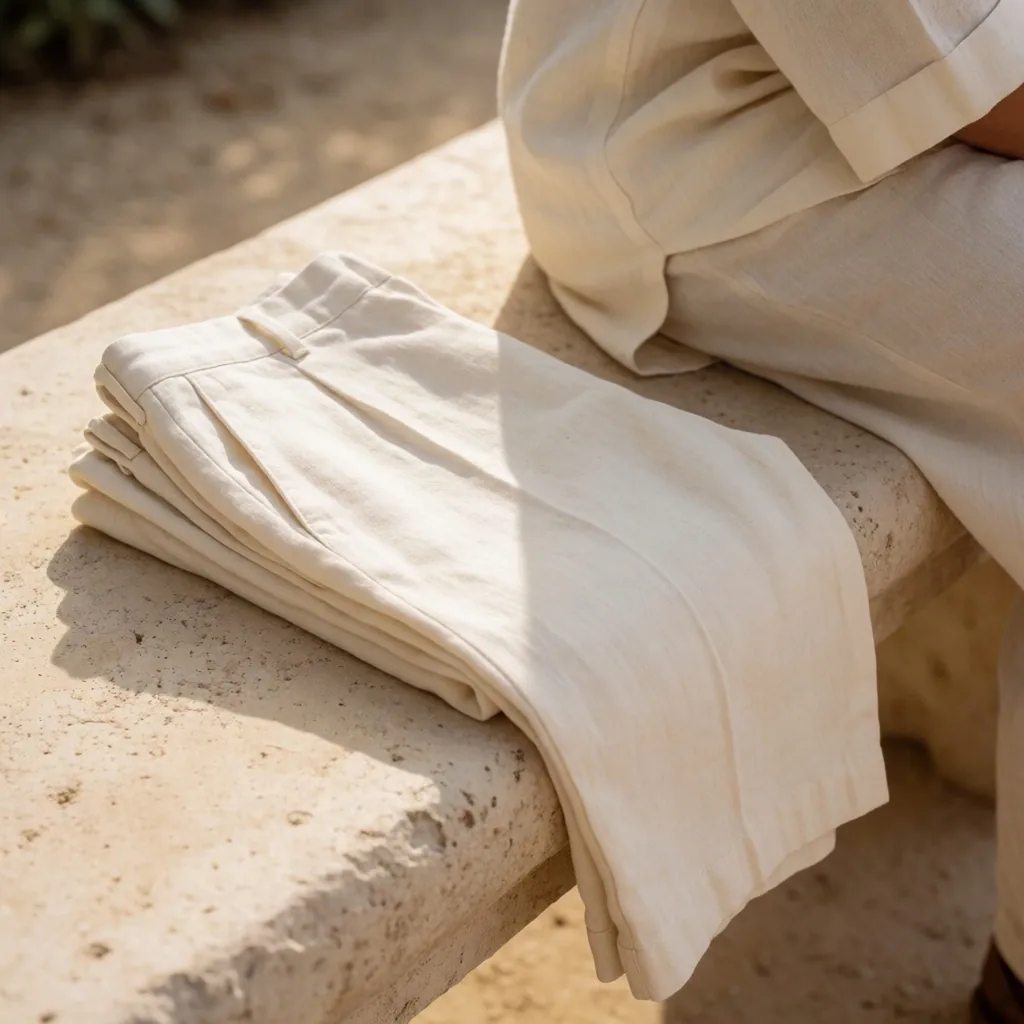
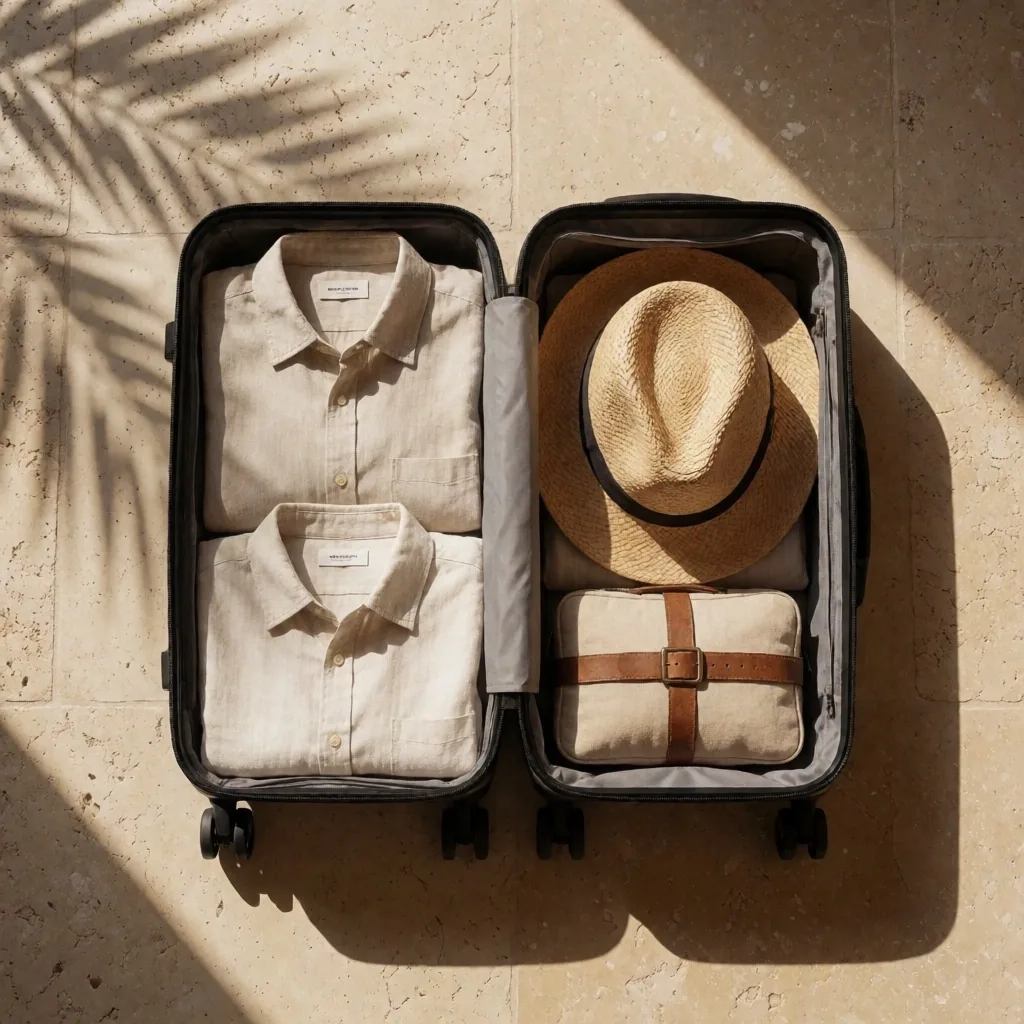
Lightweight, breathable fabrics such as linen and cotton are the backbone of managing daytime temperatures that regularly exceed 38°C between June and September. Synthetic blends trap heat and hold moisture against the skin, which quickly becomes uncomfortable during long walks or any time spent under direct sun.
Because local traditions value modest attire, pack clothing that covers the shoulders and knees as a default. This approach shows respect for cultural norms and creates a physical barrier against direct UV radiation — a practical double benefit that most travellers into Egypt underestimate until they spend a full day outdoors.
Long-sleeved linen shirts — roll sleeves up in the heat, down for sun cover
Loose trousers or midi-length skirts in cotton or rayon blends
A lightweight scarf for shoulders when entering religious or rural areas
Dark or patterned fabrics that hide sweat marks better than pale solids
Aim for four to six tops and two to three bottoms in a rotation. A modest, layered wardrobe is lighter to carry and more practical than a case full of single-use resort wear.
Chapter 02
Footwear for uneven ground and sand
A sturdy pair of walking shoes is necessary for navigating the uneven surfaces of historical sites and sandy paths. Compact stones, deep sand, and irregular steps put real stress on ankles and soles — thin-soled sneakers or fashion trainers do not hold up across a full day of walking in these conditions.
Break in any new pair at home for two weeks before departure. Long days of walking in unbroken shoes cause blisters quickly, and finding familiar footwear sizes or widths on the road is not guaranteed.
A pair of breathable sandals works for coastal areas or relaxing in your accommodation. Look for a secure strap across the heel so they stay planted on dusty or gravelled ground.
- One pair of closed, supportive walking shoes with grip soles
- One pair of strapped sandals for warm, relaxed settings
- Cushioning insoles if you plan multi-hour walking days
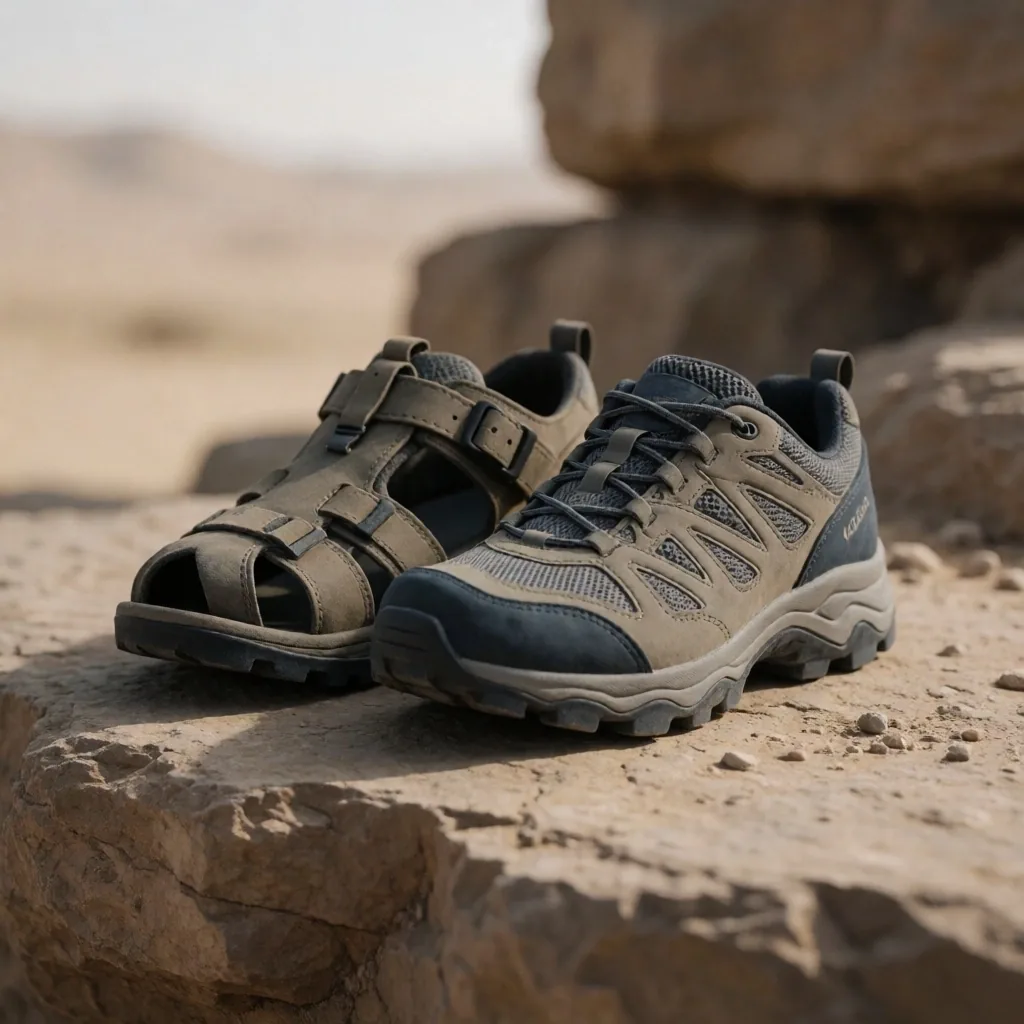
One closed pair for long walking days, one open pair for coast and accommodation. Both should be broken in before departure.
Chapter 03
Sun protection essentials
The sun is exceptionally strong throughout the year. High-factor sunscreen, polarized sunglasses, and a wide-brimmed hat are non-negotiable — reapplying protection every two hours during outdoor excursions is a basic health measure, not an extra.
Skin barrier
Broad-spectrum SPF 50 sunscreen applied liberally 20 minutes before sun exposure, then reapplied every two hours and after swimming. A mineral formula sits well on sweaty skin and causes fewer reactions in dry heat.
Eye protection
Polarized lenses cut the glare bouncing off pale stone and sand. Wraparound frames block side light and reduce the squinting that builds into headaches over long outdoor days.
Head and neck
A wide-brimmed hat shades the face, ears, and back of the neck. A lightweight scarf or pashmina doubles as a neck cover and as a shoulder wrap when entering religious spaces.
Even on overcast days, UV exposure at this latitude remains high. Sun protection is a daily habit, not a beach-only item.
Chapter 04
Health and a basic first-aid kit
A compact medical kit lets you handle minor issues without searching for a pharmacy in an unfamiliar district. Heat, changes in diet, and long transit days produce small complaints that are easy to manage with preparation.
Rehydration salts for heat exposure and digestive upset
Digestive aids for changes in food and water
Personal prescriptions in original packaging with copies
Antiseptic wipes and adhesive bandages for small scrapes
Pain reliever for headaches and mild muscle fatigue
Hand sanitiser for transit and before meals
Carry prescriptions in their original containers with a printed summary of dosages and generic names. A short letter from your doctor helps if questions arise at customs.
Chapter 05
Electronics and power adapters
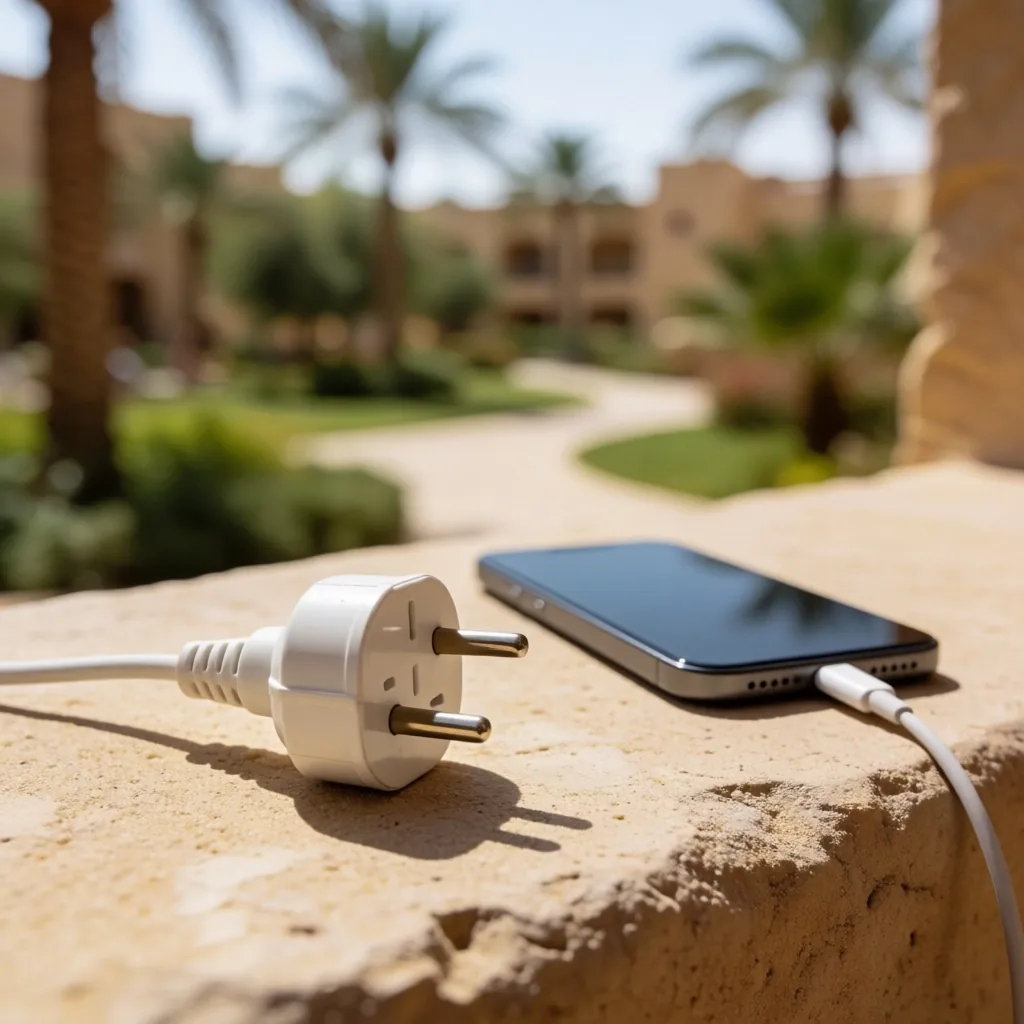
The region typically uses the standard European two-pin plug — Type C or Type F — at 220 volts. Bringing a universal adapter ensures you can charge mobile devices and camera batteries without scrambling for compatible sockets at the start of a long day.
A portable power bank is highly recommended for long days away from a wall outlet, particularly when using GPS navigation, offline maps, or photography tools that drain battery quickly in heat.
Universal adapter covering Type C and Type F outlets
Power bank rated for at least one full phone recharge
Spare charging cable — the primary one fails at the worst moment
Headphones for transit noise and audio guides
Chapter 06
Day bags and everyday security
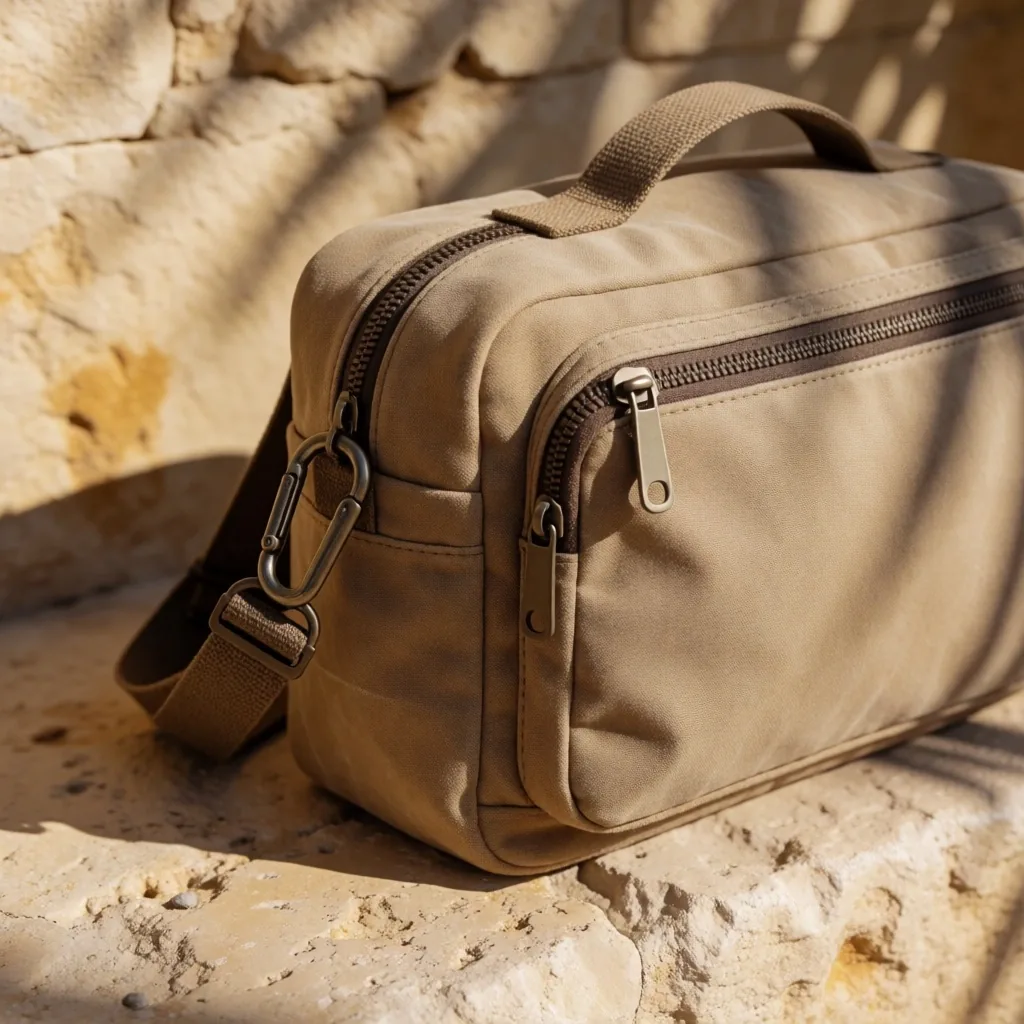
A secure, cross-body bag or a small backpack with locking zippers is the most practical daily carry for the essentials you want on you: water, sun protection, documents, phone, and the small medical items you might need on the move.
Keeping your belongings close to your body in crowded areas is a simple but effective measure. A bag that swings behind you in a dense market is an easy target — a cross-body strap worn in front keeps everything visible.
- Cross-body bag with a strap long enough to wear across the chest
- Small padlock or zip-toggle clips for the main compartment
- Waterproof pouch for phone and documents near the coast
- A thin secondary cloth bag for wet swimwear or sandy items
Chapter 07
Layering for the drop after sunset
While the days are hot, temperatures in the desert and near the river can drop by 15°C or more after sunset. A light jacket or a fleece sweater should be in your luggage for evening meals outdoors, early morning departures, and the high levels of air conditioning found in some transport vehicles.
A packable wind shell works in most seasons. For winter months — December through February — add a warmer mid-layer, especially if you plan an early morning outdoor excursion or any time in the desert after dark.
The same air conditioning that feels restorative at midday becomes uncomfortably cold on a long evening bus or train ride. Keep a layer within reach, not buried at the bottom of your main bag.
Layering pairs to pack
Light wind shell
Blocks wind, packs to nothing, works over a t-shirt for evening outdoors.
Fleece mid-layer
Warmth for early departures and desert evenings, light to carry.
Long-sleeve base
Doubles as sun cover during the day and a base layer at night.
Chapter 08
Documents, copies, and backups
Physical copies of your passport, insurance details, and emergency contacts should be kept separate from the originals. While digital versions are convenient, having paper backups is a reliable safeguard when technology fails, devices lose charge, or connectivity drops out in a remote area.
Include a few passport-sized photographs with your documents. These are sometimes requested for local permits or administrative needs and are simpler to carry than to source on short notice.
- Passport original plus two photocopies stored in separate bags
- Insurance card and emergency contact list printed on paper
- Scanned copies stored in a secure cloud account accessible offline
- Four to six passport-sized photos in a small envelope
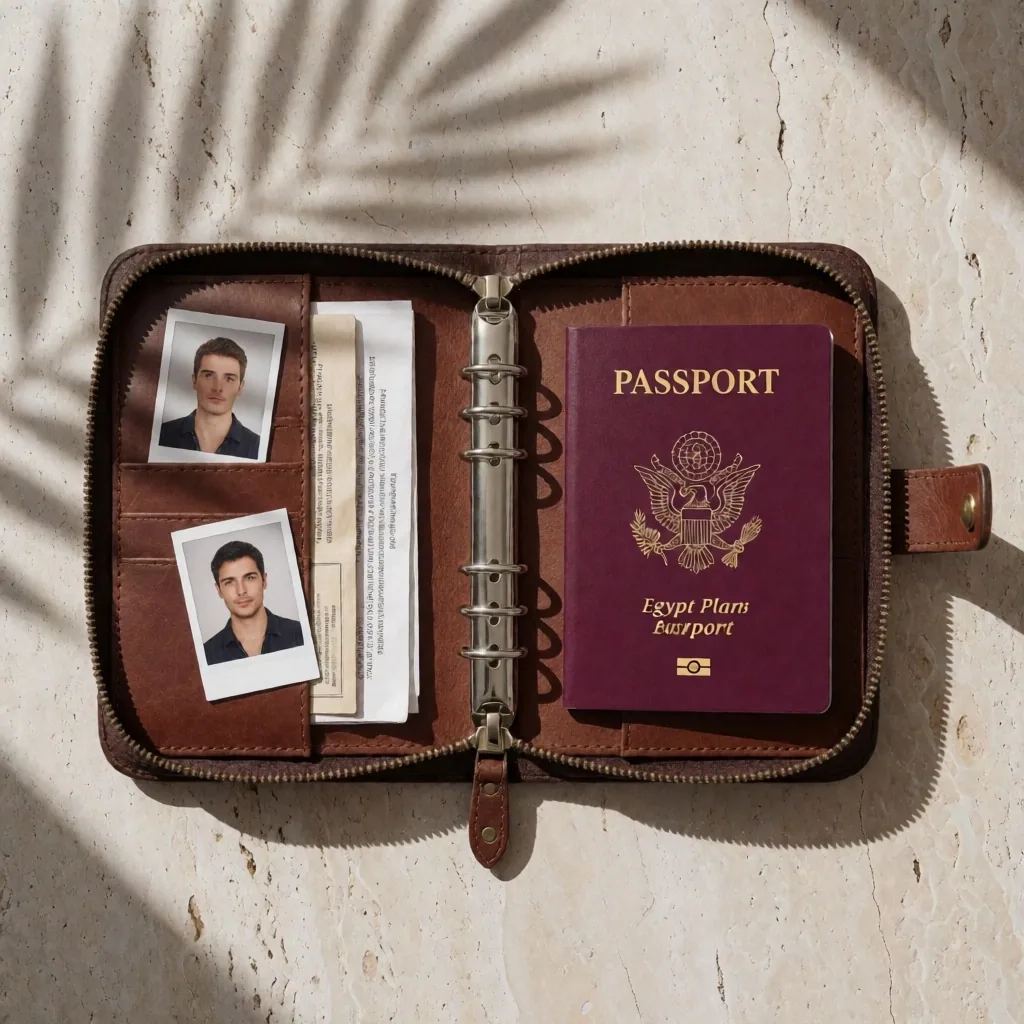
Split originals and copies across different bags. If one goes missing, the other keeps you moving.
Reference
What each environment asks of your kit
Egypt spans several distinct environments across a single day's travel. Use these notes as a cross-check before you finalise the bag — each row describes what that setting adds to the base list above.
Quick answers
Common questions before you pack
What fabrics actually work in the daytime heat?
Natural fibres — linen, cotton, and rayon blends — breathe and wick moisture away from the skin. Loose weaves let air circulate, which is more useful in dry heat than tight athletic fabrics designed for humid gyms. Avoid heavy polyester in direct sun; it traps heat and holds sweat against the skin.
Do I need modest clothing for the whole trip?
Covering the shoulders and knees is the practical baseline across most settings — urban streets, religious buildings, and rural areas all favour this approach. Coastal accommodation is more relaxed, but packing a layer you can throw over the shoulders means you are always ready to step into a more conservative space without changing plans.
How cold does it really get at night?
Desert nights can fall 15°C or more below the daytime high, and the contrast feels sharper because the air is dry. From December to February, early morning temperatures near open ground can drop below 10°C. A light fleece plus a wind shell covers the full range without adding bulk to your luggage.
Should I bring a power bank or rely on wall charging?
Bring both. A power bank rated for one full phone recharge handles long days away from a wall outlet — GPS, photography, and offline maps drain batteries faster than usual in heat. Wall charging covers evenings at your accommodation, and a universal adapter means you are not dependent on a single socket type.
Continue reading
The list is the start. The climate is the rest.
Packing well means little without understanding how the climate shifts from coast to desert to city over the course of a day. Our regional climate guide walks through what to expect across the different environments a traveller into Egypt typically moves through — and how to dress and plan for each.
For respectful conduct in markets, religious spaces, and rural areas, see our guide to local etiquette and traditions.
Travel Guide Egypt — practical preparation for the climate, terrain, and culture of the region.